
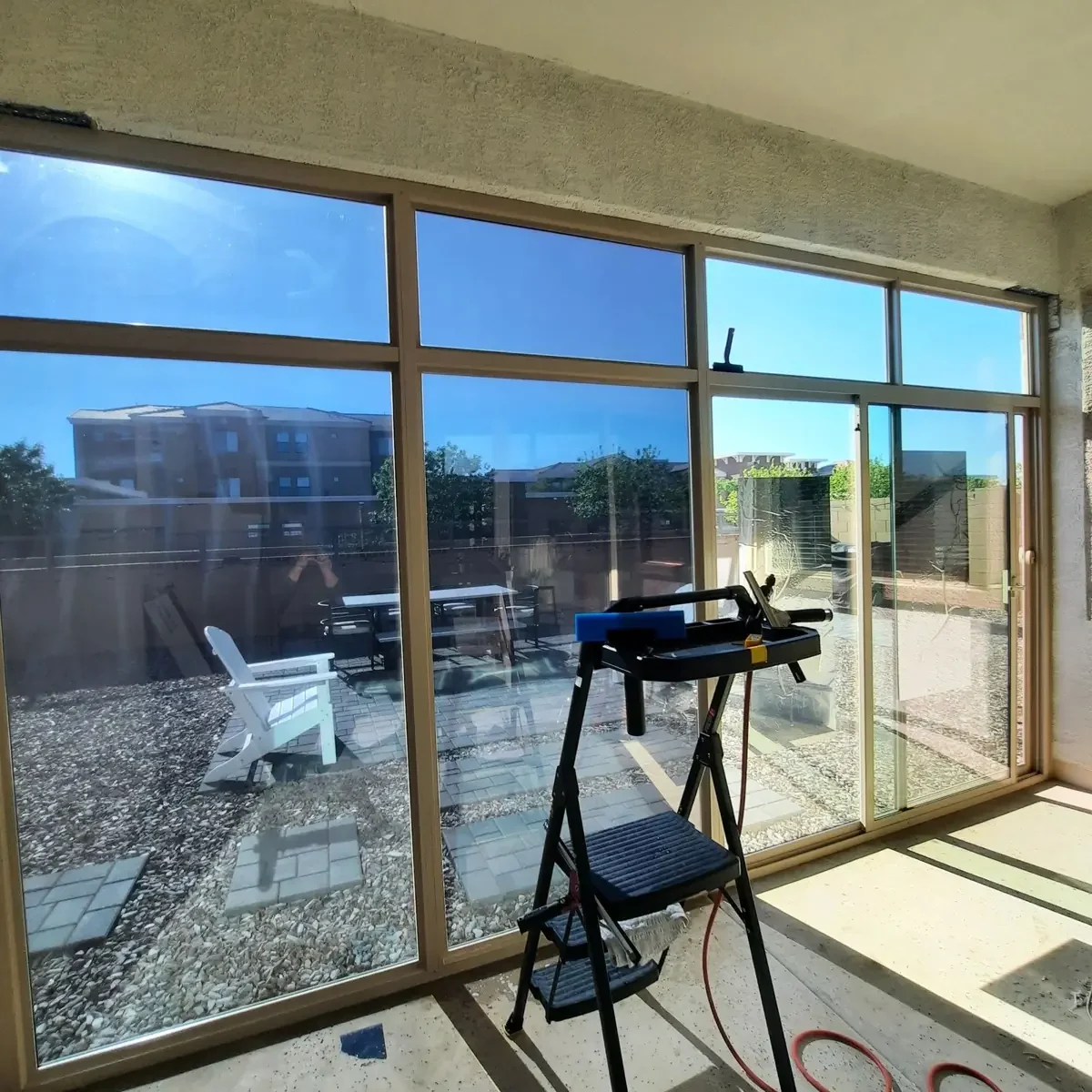
It’s the most common question we get, and the honest answer is: yes, almost always, as long as the film is approved for that glass. Here’s what that means and why it matters.
What makes dual-pane different
A dual-pane (insulated) window is two sheets of glass sealed around the edge with a gap between them. That sealed unit is what makes the window efficient, and it’s what film can harm if it’s the wrong film.
Window film absorbs part of the sun’s energy, which warms the inner pane. If that pane gets much hotter than its edges, or half of it is in shade while half is in sun, the temperature difference creates stress. Push it too far and you can get a thermal stress crack, or put extra strain on the seal, which shows up later as fogging between the panes.
How installers avoid problems
Film manufacturers test their products on different glass types and publish film-to-glass application charts. For each film, the chart says which glass it’s approved on (single-pane, dual-pane clear, dual-pane Low-E, tempered, laminated), and often a maximum pane size. A good installer:
- Identifies the glass: panes, Low-E coating and which surface it’s on, tempered or laminated stamps.
- Measures the largest panes and notes partial shading from overhangs, patio covers or trees.
- Recommends only films approved for that combination.
- Registers the film warranty so the manufacturer’s glass coverage applies.
What about Low-E?
Low-E glass has a microscopically thin coating that reflects heat. In most Arizona windows it sits on surface 2 (the inside face of the outer pane, sealed inside the unit), and many films are approved for it. Some newer high-efficiency windows have a second, room-side Low-E coating on surface 4, the glass you can touch from inside. Film must not be applied over that coating. A Low-E coating detector tells us which you have in seconds.
Which films are usually safe?
Lighter, lower-absorption films, including most spectrally selective and nano-ceramic films, tend to be approved on the widest range of dual-pane and Low-E glass. Very dark or highly absorptive films are the ones most often restricted. That works out well in Arizona, where most homeowners want heat rejection without a dark look anyway.
Will it void my window warranty?
It depends on the window manufacturer; some say aftermarket film voids their glass or seal warranty. That’s why major film brands offer their own glass coverage for thermal breakage and seal failure when the film is installed per their chart. Coverage limits and conditions vary by brand, so ask your installer to show you the terms in writing.
The bottom line
Dual-pane windows are very commonly filmed, and done right it’s safe and effective. The step that matters is identifying the glass before choosing the film. If you’re not sure what you have, try our 60-second glass check or book a free on-site glass ID.