
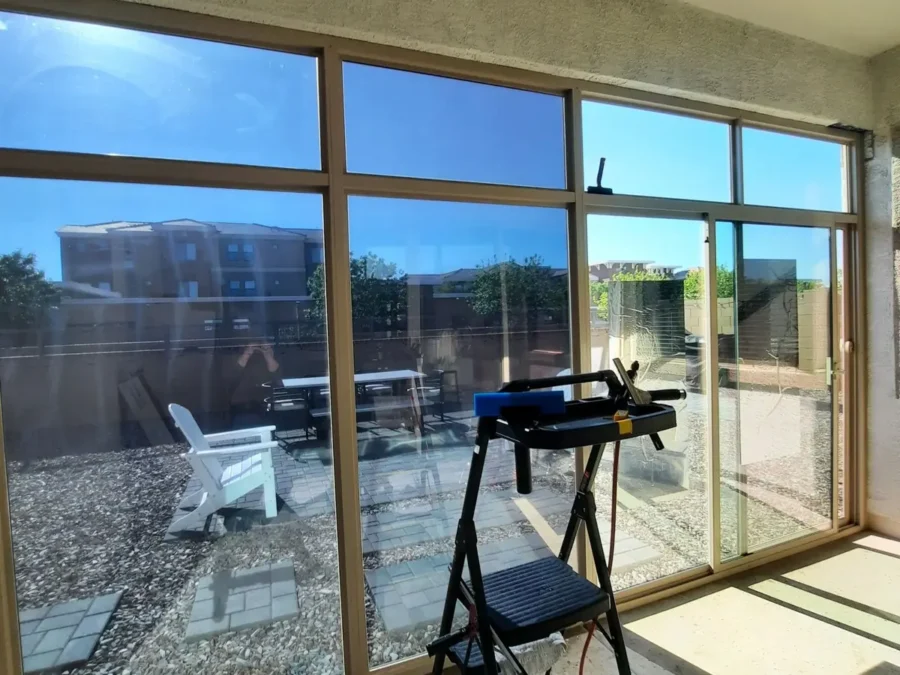
The short answer: yes, most dual-pane and Low-E windows can take window film, but only films the film manufacturer has approved for that specific glass. The wrong film can overheat the glass, stress the seal, and put your window warranty at risk. So the first thing we do on every job is identify the glass.
Check your glass in 60 seconds
Answer five quick questions for a first read on what your windows can take. It’s general guidance. The on-site glass ID decides the film.
Why the glass matters
Window film works by reflecting and absorbing solar energy. The energy a film absorbs warms the glass it’s on. On a single pane of clear glass that’s rarely a problem. On a sealed dual-pane unit, especially one with a Low-E coating already reflecting heat, the inner pane can run much hotter than the outer pane and the frame edges. Two things can then go wrong:
- Thermal stress cracks. Glass that’s hot in the middle and cool at the edges (or half in sun, half in shade) can crack. Large panes, partial shading, and heavily absorptive dark films raise the risk.
- Seal failure. Extra heat and expansion can stress the seal between the panes. A failed seal shows up later as fogging between the glass.
Both are avoidable. Film manufacturers test their films on different glass types and publish film-to-glass application charts that say which films are approved for which glass, and at what size. Using a film within those limits is what makes the manufacturer’s glass coverage apply.
Know your glass
| Glass | How to tell | What it means for film |
|---|---|---|
| Single-pane | One sheet of glass; common in older homes | Most films approved, including darker and reflective options |
| Dual-pane (insulated) | Two sheets with a spacer bar between them at the edge | Many films approved; heavily absorptive films may be limited by pane size |
| Low-E, surface 2 or 3 | Faint color in one reflection when you hold a flame to the glass; label or etching may say “Low-E” | Only films approved for that coating, usually lighter, lower-absorption, spectrally selective films |
| Low-E, room-side (surface 4) | Coating on the inside surface you can touch; newer high-efficiency windows | Film must not be applied over it. We confirm with a coating detector |
| Tempered | Etched stamp in a corner; required near doors and floors | More resistant to thermal stress, which widens the options |
| Laminated / triple-pane / tinted | Stamp or manufacturer data | Some manufacturers exclude these from glass coverage; checked case by case |
Our 5-point glass check
- Panes & spacerSingle, dual or triple; seal condition; any existing fogging.
- Low-E coatingA coating detector tells us whether there’s Low-E and which surface it’s on.
- Glass typeTempered, laminated or tinted glass, from the stamps and the window data.
- Size & shadingLargest pane, exposure, overhangs, trees and patio covers that cast partial shade.
- Film matchOnly films the manufacturer approves for that glass and size make the shortlist.
Warranties, honestly
Two warranties matter: your window manufacturer’s warranty and the film manufacturer’s. Some window makers say aftermarket film voids their glass or seal warranty. To cover that gap, major film manufacturers offer glass coverage for thermal breakage and seal failure when their film is installed according to their film-to-glass chart.
Terms vary a lot between brands and product lines: per-window dollar limits, time limits, exclusions for laminated or triple-pane glass, and conditions like the window maker’s seal warranty still being in effect. We’ll show you the actual terms for the film we recommend, in writing, before you decide.
Choosing the film
Once we know what your glass can take, the choice comes down to how much heat you want to block, how much light you want to keep, and how you want the glass to look. Compare window film types →
Glass & film questions
Can window film crack my windows?
Film that isn’t suited to the glass can raise the risk of thermal stress cracks, especially dark, highly absorptive films on large dual-pane units that are partly shaded. Matching the film to the glass with the manufacturer’s chart is how that risk is managed.
My windows already have Low-E. Do I still need film?
Often, on west- and south-facing glass in Arizona. Low-E glass helps, but many Low-E coatings are designed to keep heat in during winter rather than block intense summer sun. Approved films can add significant heat and glare reduction on top of it.
Can film fix foggy dual-pane windows?
No. Fogging between the panes means the seal has already failed. That unit should be repaired or replaced; film can go on the new glass afterward.
Can you put film on the outside of the window?
Exterior films exist for glass that can’t take interior film, including some room-side Low-E glass. They’re a specialized product with a shorter life in Arizona sun, so we’ll only suggest them where they make sense.
How do I find out what glass I have?
Look for a label or tiny etching in a corner of the glass, check your window paperwork, or use the flame test: hold a lighter near the glass at night. In dual-pane you’ll see four reflections, and a different-colored one indicates Low-E. Or just book an estimate and we’ll check it for you.
Not sure what glass you have? That’s our job.
Free on-site glass ID with a Low-E coating detector, and film options that are approved for your windows.