
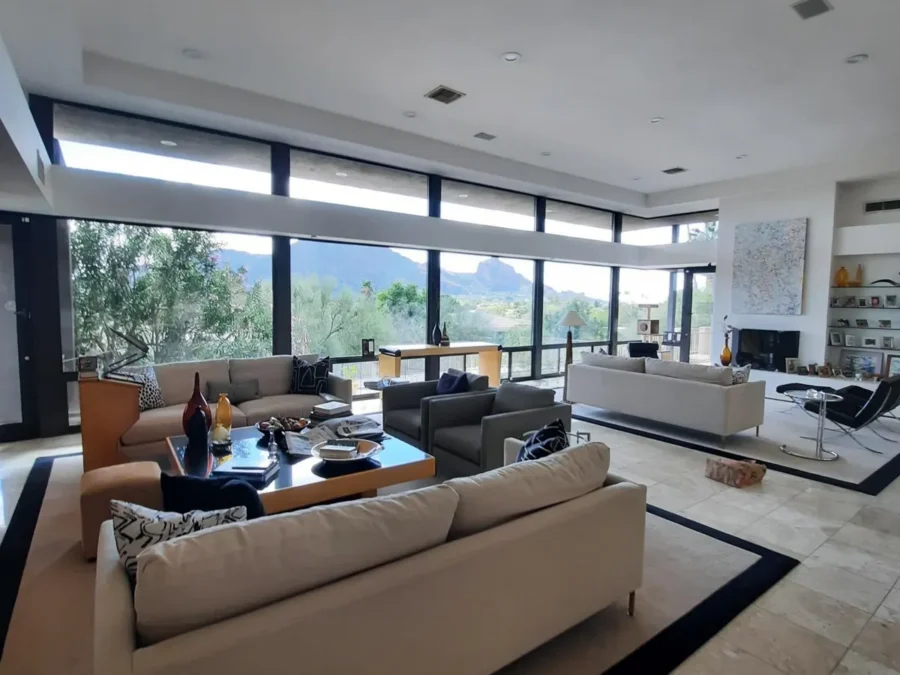
In the Valley, the west side of the house is where comfort goes to die. Late-afternoon sun comes in low and straight through the glass, at the hottest part of the day, when the house has already been absorbing heat for hours.
Why west-facing glass is the worst
- Low sun angle. Overhangs that shade south windows at midday don’t help at 4pm, when the sun is low in the west.
- Peak timing. West sun peaks when outdoor temperatures and electricity demand are highest.
- Glare. Low sun goes straight into eyes and screens.
- Heat that lingers. Floors and furniture soak up heat and release it into the evening.
Your options, compared
| Option | Heat | Keeps the view | Cost & disruption |
|---|---|---|---|
| Window film | Good to excellent, depending on film | Yes, near-clear films available | Low; usually installed in a day or two |
| Sun / shade screens | Good | Reduced; darker view, especially at night | Low to moderate; exterior hardware |
| Interior shades & blinds | Limited, heat is already inside | Only when open | Low |
| Replacement windows | Good to excellent | Yes | Highest; construction and lead time |
For most homes the best value is approved film on the worst glass first (usually west and south), then the rest if you want it. Film and screens can also be combined.
The right film for hot glass
On west glass, people usually want maximum heat rejection without a dark or mirrored look. That points to spectrally selective or nano-ceramic films, provided they’re approved for your glass. On large dual-pane units that are partly shaded by a patio cover or tree, the film choice narrows; we check that on site. Glass compatibility →
SRP customers: SRP has offered rebates for qualifying window film on sun-facing windows. Program terms change, so we’ll check the current rebate and paperwork with you at the estimate.
Start with your hottest room.
We’ll measure the heat, identify the glass, and show you film samples on that window.