
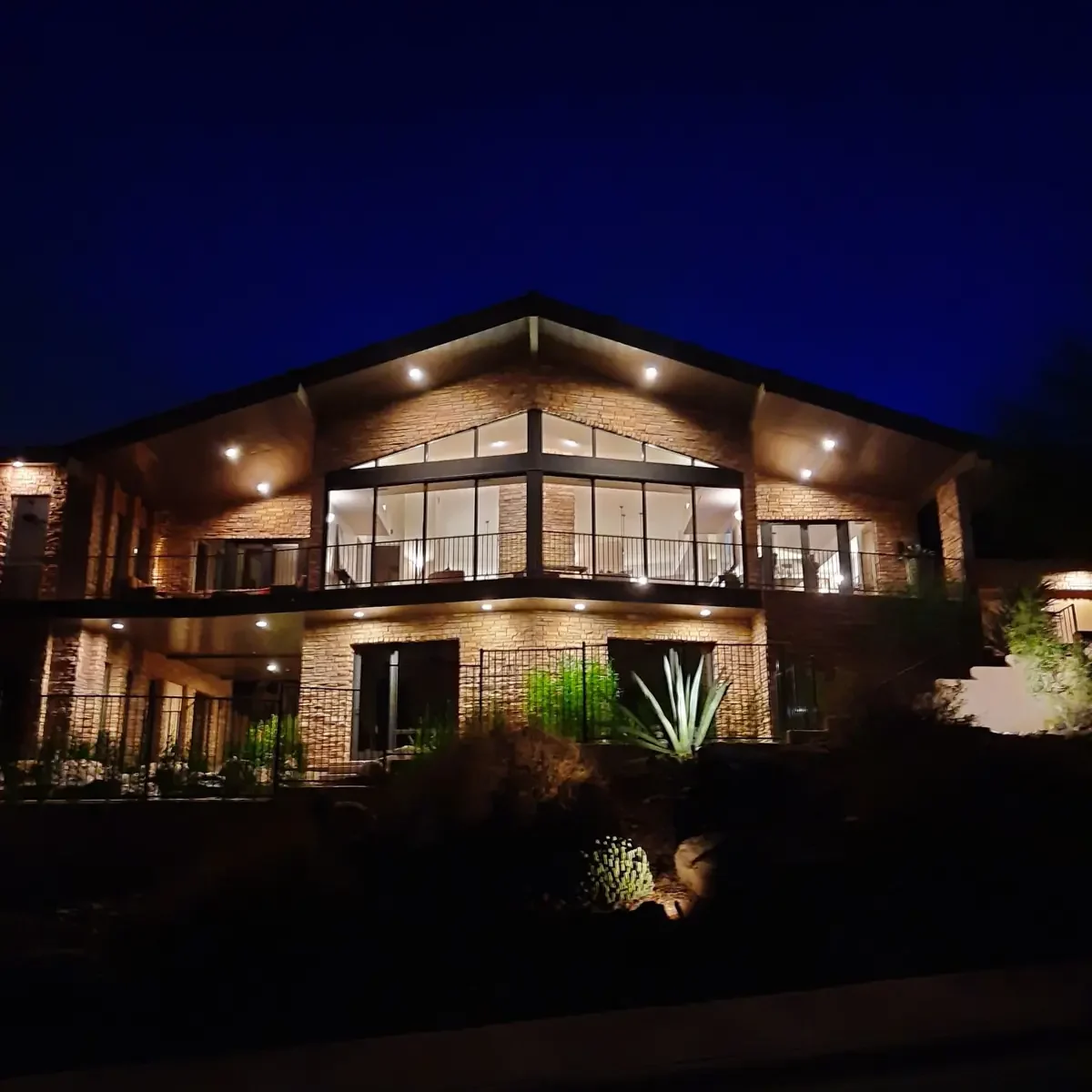
If one room in your house is unbearable from mid-afternoon until bedtime, it almost certainly faces west. Here’s why, and what actually works.
Why west rooms overheat
- The sun is low. Roof overhangs shade south glass at midday but do little against late-afternoon western sun.
- It’s already hot. West sun peaks when outdoor temperatures peak.
- Heat is stored. Floors, walls and furniture absorb the sun and keep radiating heat into the evening.
What works and what doesn’t
Interior blinds and curtains
They help with glare, but by the time sunlight hits a blind it’s already inside. You lose the view and the room still warms up.
Sun screens
Exterior screens stop a good share of heat before it reaches the glass. The trade-offs are a darker, hazier view, especially at night, and hardware on the outside of the house.
Window film
Modern spectrally selective and nano-ceramic films block a large share of solar heat while staying close to clear, so you keep the view. Installation is fast and there’s nothing on the exterior. On dual-pane or Low-E glass, the film has to be approved for your specific glass. here’s how that works.
Replacement windows
Effective, but the most expensive and disruptive option. If your windows are otherwise sound, film on the west and south glass usually delivers most of the comfort for a fraction of the cost.
A practical plan
- Start with the worst room, usually the west-facing living area or office.
- Choose a near-clear, high-heat-rejection film approved for your glass.
- Add film to south glass next, then the rest if you want a consistent look.
- If you’re an SRP customer, ask about current window film rebates before you book.
Want to see the difference on your own glass? Book a free estimate and we’ll bring samples.